
Here is a short routine you can do in a small clear space, with a fixed counter for one move and a stable support nearby if you need it.
Today’s plan
Walk or march comfortably for a minute or two. Then try one round:
- Mini squat5
- Counter press-up5
- Move one leg backward5 per side
- Side steps4–5 each way
- Slow standing march30–60 seconds
Rest when you need to. These are modest starting suggestions, not a prescription. Repeat only if the first round feels manageable.
1. Mini squat
Stand with your feet about hip width apart. Hold a stable support if useful. Bend your knees a little, keeping your back comfortably upright, then stand again. A small bend is enough to start.
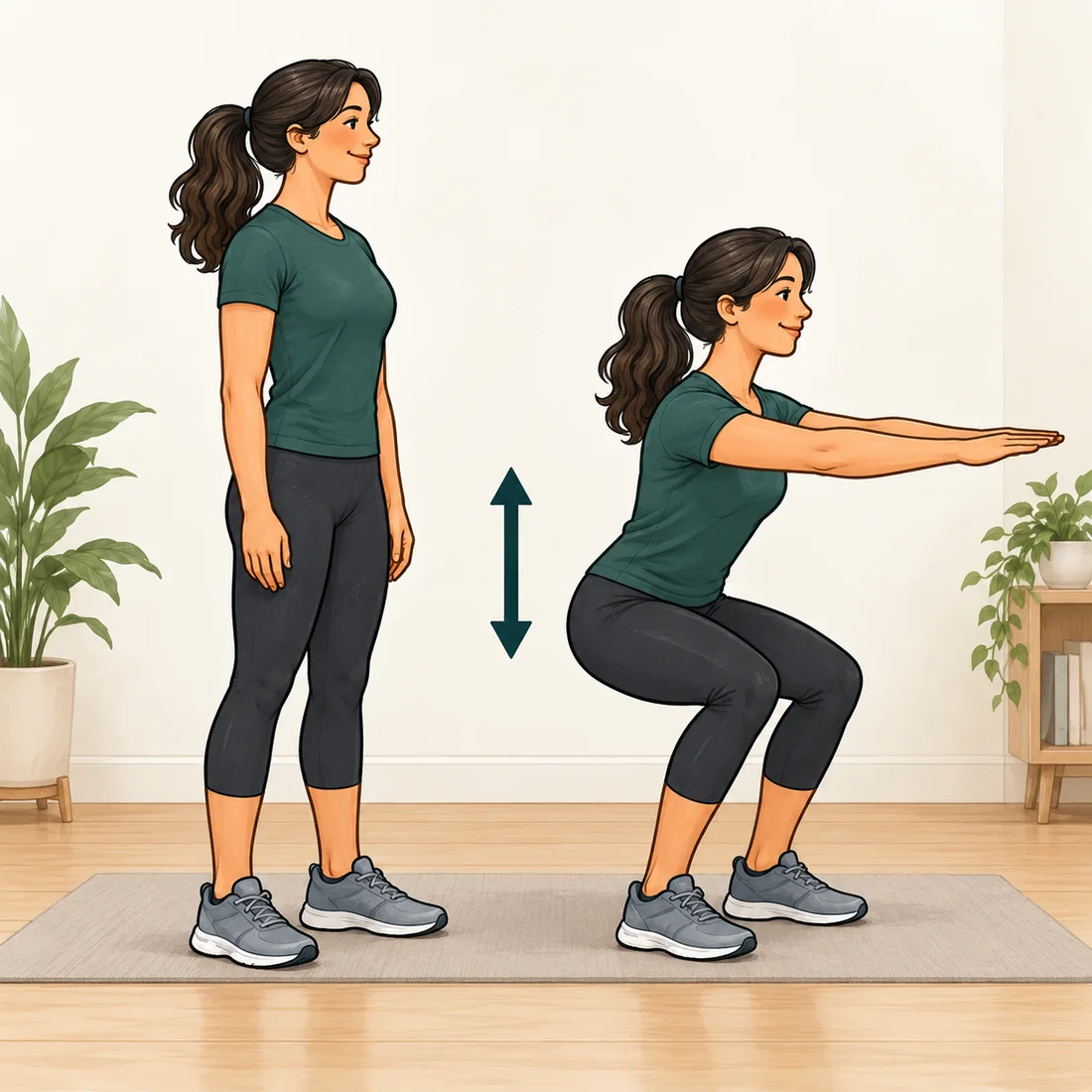
Make the bend smaller and use a support you have checked for stability. Do not force depth.
2. Counter press-up
Put your hands on a fixed, sturdy counter. Step back until the position feels comfortable. Bend your elbows to bring your chest toward the counter, then press away.
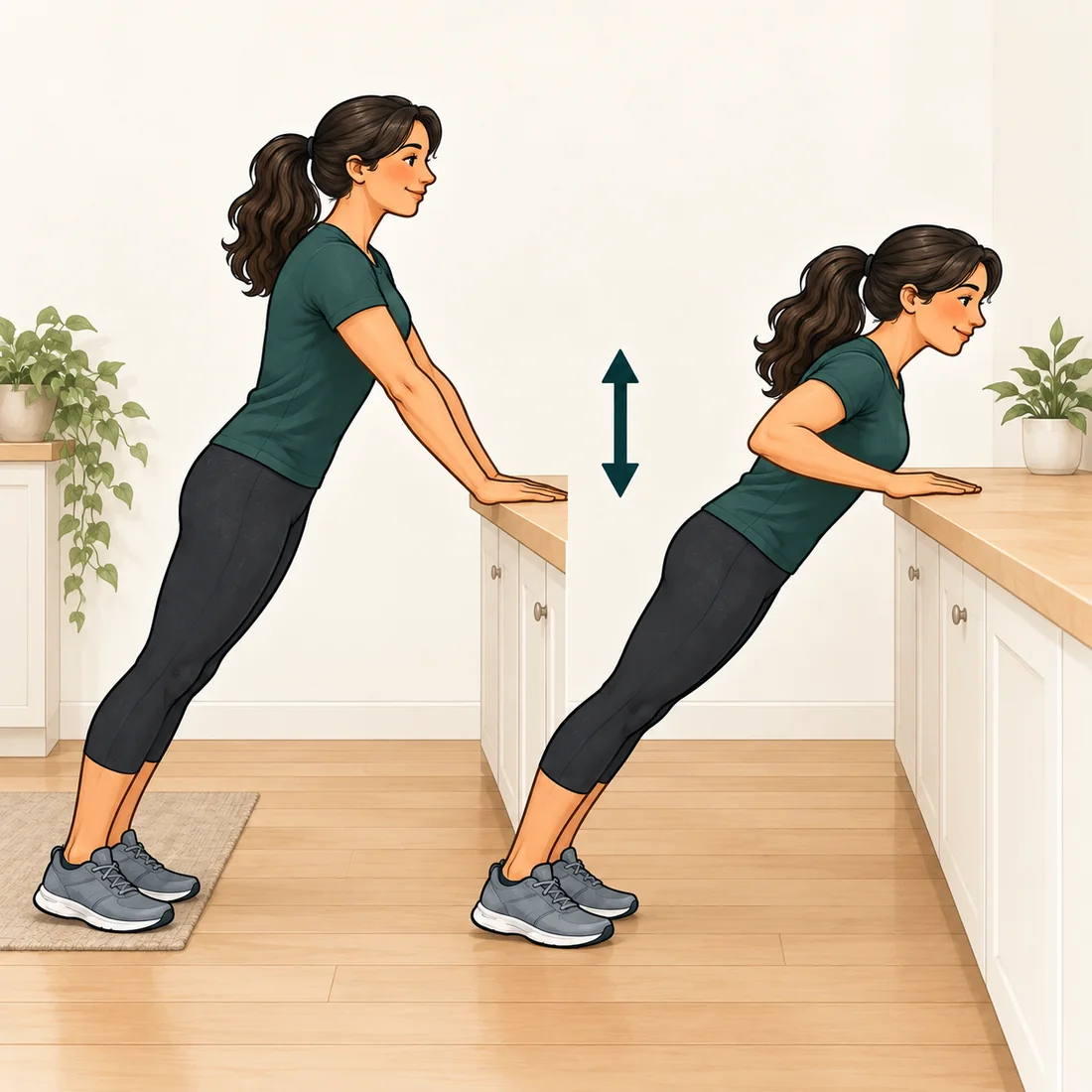
Use a wall press-up if this feels too hard or your counter is not secure. This is the same pushing pattern as the wall press-up in our first routine, at a somewhat harder incline. Do not use a movable table or a slippery surface.
3. Move one leg backward
Hold a stable support. Move one leg a small distance behind you without arching your back. Return slowly, then change sides.
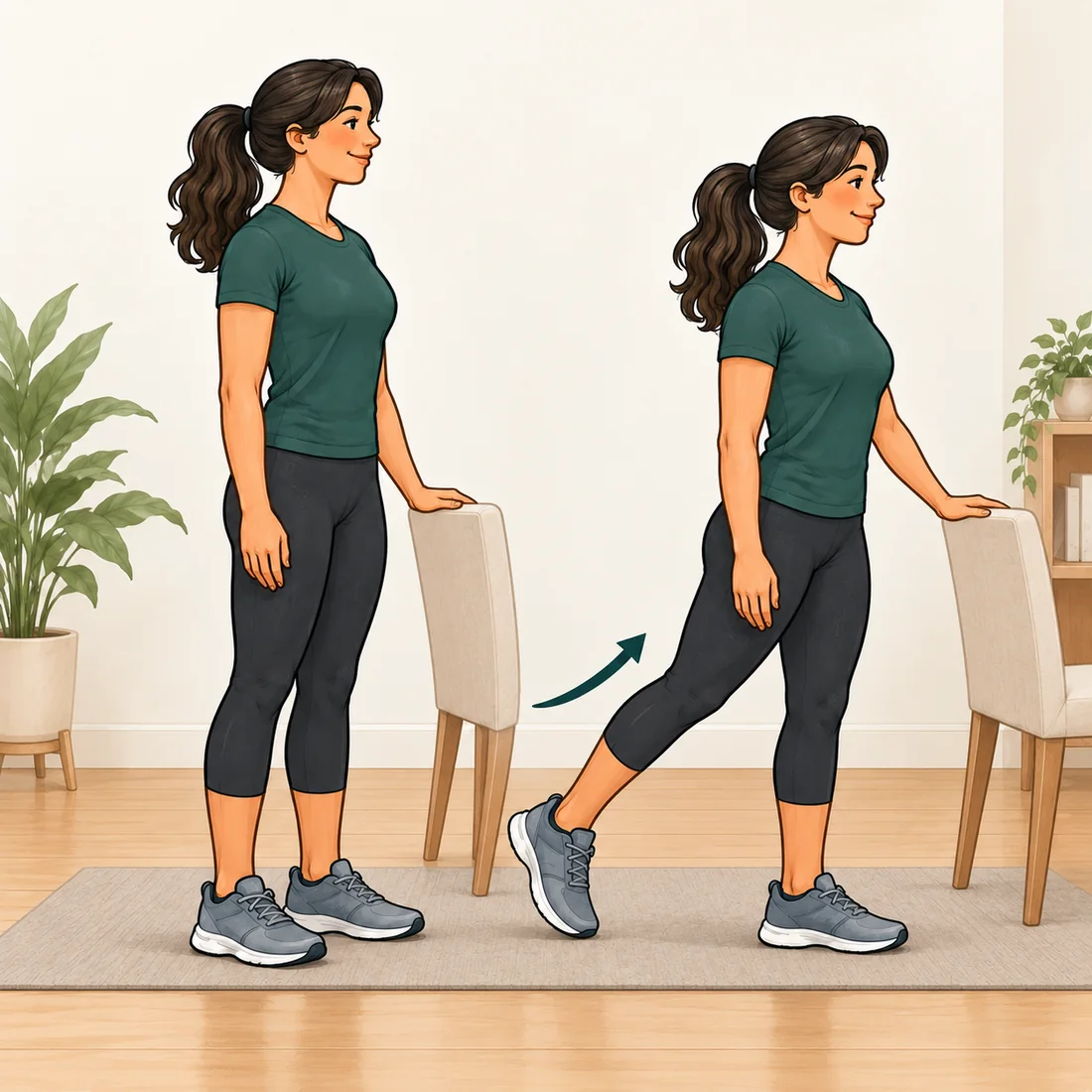
Keep the range small and use both hands for support if needed. Do not swing the leg or lean backward.
4. Side steps
Step one foot sideways, then bring the other foot toward it. Take a few steps, then reverse direction. In a tiny space, repeat one step each way.
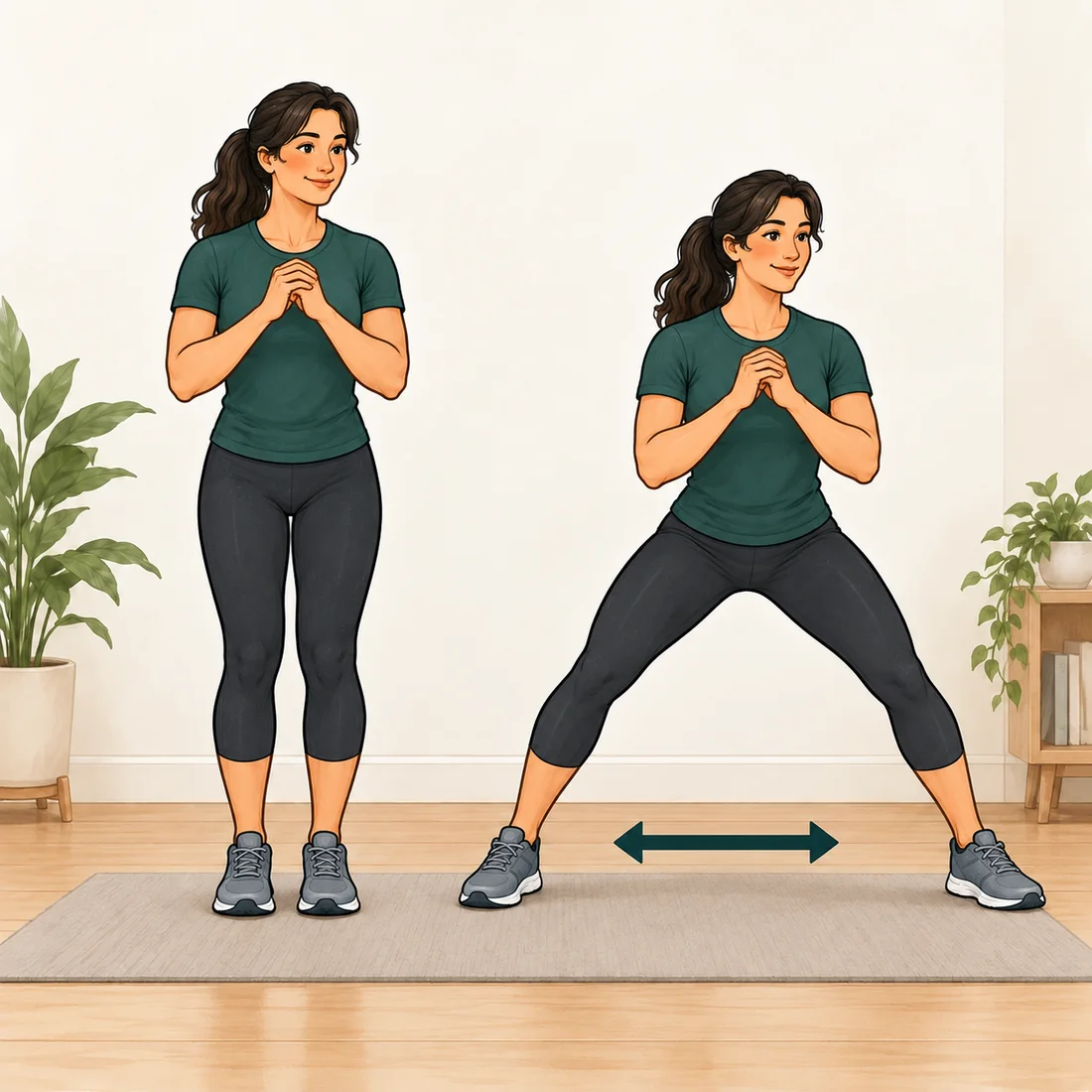
Clear trip hazards first. Do not cross your feet or rush, and keep safe support nearby if your balance is uncertain.
5. Slow standing march
Lift one knee a comfortable amount, put your foot down and alternate sides. Make the lift smaller or use stable support if needed.
This is gentle activity and controlled weight shifting. It is not substantial abdominal resistance training.
What this routine does not cover well
There is no meaningful equipment-free pulling exercise for your upper back here. Progressive resistance is limited, and the routine gives your calves little focused strength work and your trunk only a modest challenge.
Do not improvise a pulling exercise with a door, table or towel. If pulling resistance becomes a real limitation, suitable equipment may make sense later. See how to decide what you need, or try the first no-equipment routine for different floor movements and supported calf raises.
Stop a movement if it causes pain or you feel unwell. If you have an existing injury, medical condition, unexplained pain, or recent treatment or surgery, ask your doctor, physiotherapist, or another qualified clinician which movements suit you.
References
- NHS — strength exercises: mini squats and standing leg movement.
- NHS — balance exercises: controlled side steps and support.
- NHS — warm-up guidance: easy marching and knee bends.
- University Hospitals Sussex NHS — standing exercises: backward leg movement.
- ACE — body-weight exercise guide: incline press-up example.