
You do not need to buy anything to find out whether working out at home suits you.
Clear a little space, make sure the floor is free of anything you can trip over, and use a sturdy chair that does not roll or slide.
Today’s plan
- Warm up2–3 minutes of easy walking or marching
- Sit-to-standAbout 5
- Wall press-upAbout 5
- Glute bridgeAbout 5
- Beginner bird-dogAbout 3 gentle reaches each side
- Supported calf raiseAbout 5
Rest whenever you need to.
Stop a movement if it causes pain or you feel unwell.
1. Sit-to-stand
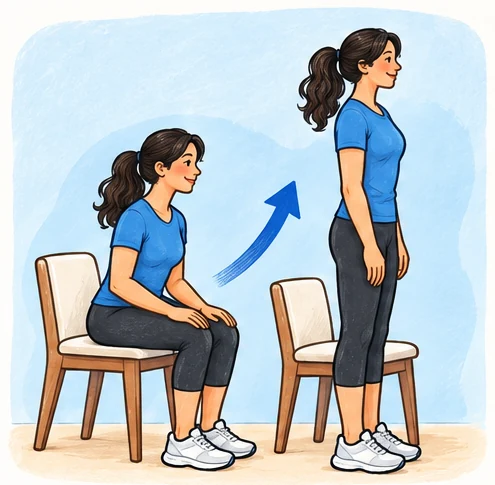
Sit on a stable chair with your feet on the floor.
Lean forward slightly, stand up slowly, then sit back down with control.
Start with about 5.
If you need help, use your hands for support.
The chair must be sturdy and should not roll or slide.
2. Wall press-up
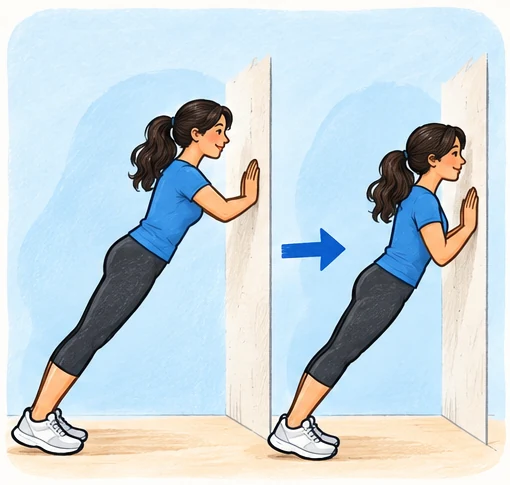
Place your hands on a solid wall around chest height.
Step back to a comfortable distance, bend your elbows as you move toward the wall, then press yourself away again.
Start with about 5.
Standing closer to the wall makes the movement easier.
3. Glute bridge
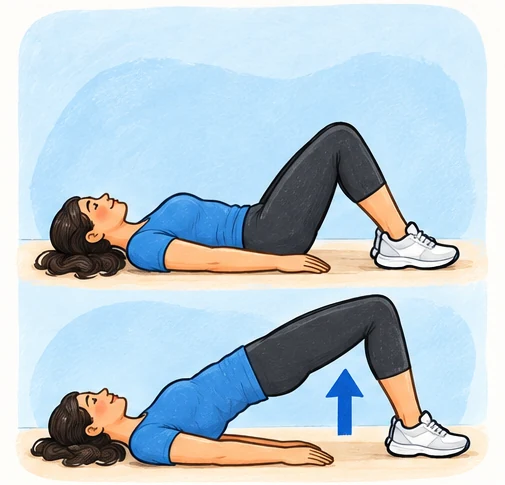
If getting comfortably onto the floor is fine for you, lie on your back with your knees bent and feet flat.
Lift your hips a comfortable amount, pause briefly, then lower slowly.
Start with about 5 controlled repetitions.
If floor access is difficult, skip this movement.
4. Beginner bird-dog
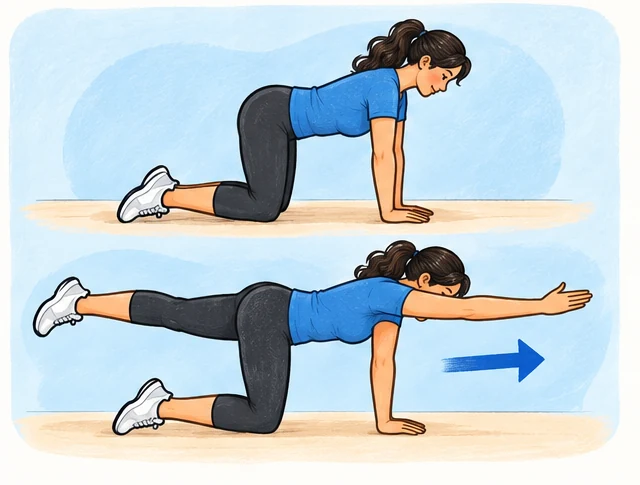
Start on your hands and knees and keep your body steady.
Begin by reaching one arm or one leg at a time.
If that feels comfortable and controlled, you can gradually progress toward reaching the opposite arm and leg together.
Start with about 3 gentle reaches each side.
If your wrists, knees or getting onto the floor make this unsuitable, leave it out.
5. Supported calf raise
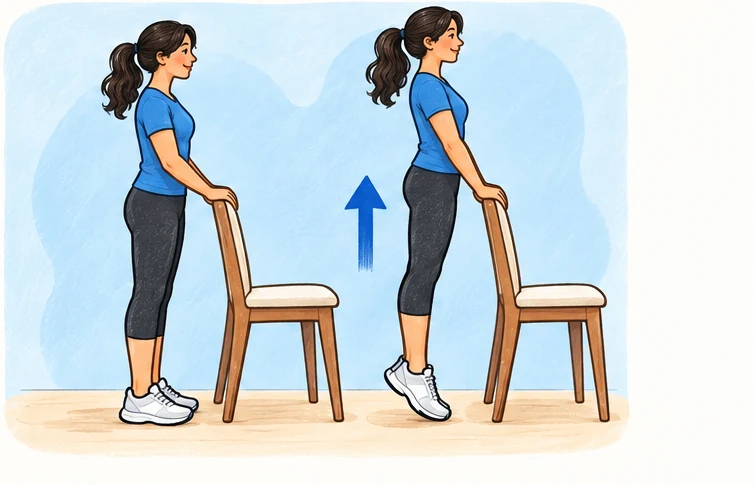
Use a sturdy chair or solid support you have checked for stability.
Rise slowly onto the balls of your feet, then lower again.
Start with about 5.
Keep using the support if your balance is uncertain.
What this routine does not cover well
This routine gives you a leg movement, an upper-body push, hip work, trunk control and calf work.
It does not give your upper back much pulling resistance.
If you eventually need more pulling work or more resistance, that may be where a suitable band, weight or other proper equipment becomes useful.
Not sure whether you need equipment yet? What Do You Actually Need to Work Out at Home?
References
- NHS — home strength exercisesSupports sit-to-stand, standing alternatives and calf raise guidance.
- NHS — Strength and Flex exercise videosIncludes the standing press-up demonstration.
- ACE — glute bridge exercise guide
- ACE — bird-dog exercise guide
- NHS — walking guidance