
An easy-to-follow way to change your walking pace, with no equipment required.
Want to make your usual walk a little more purposeful? Japanese interval walking alternates three minutes at an easy pace with three minutes of faster walking. You repeat the pair as your comfort and fitness allow. It’s a practical way to add variety and a stronger effort to a walk without turning it into a run or buying anything.
Try it today
Choose a safe, clear route where you can change pace without sharp turns. Walk comfortably for a few minutes, then alternate:
- 1 · Easy3 minutesA relaxed pace.
- 2 · Faster3 minutesA controlled, purposeful walk.
Comfortable start → repeat the pair → comfortable finish.
That’s one six-minute pair. New to brisk walking? Try just one or two pairs, then finish with a comfortable walk. Add pairs or days gradually. If you already walk briskly without difficulty, you can build toward five pairs—30 minutes of alternating walking, plus your comfortable start and finish.
The NHS suggests that during a brisk walk you can talk but not sing. Use that as a rough cue, not a speed requirement. Your faster pace may be gentler when starting out. The beginner version here is an adaptation, not the precise effort used in the Japanese research.
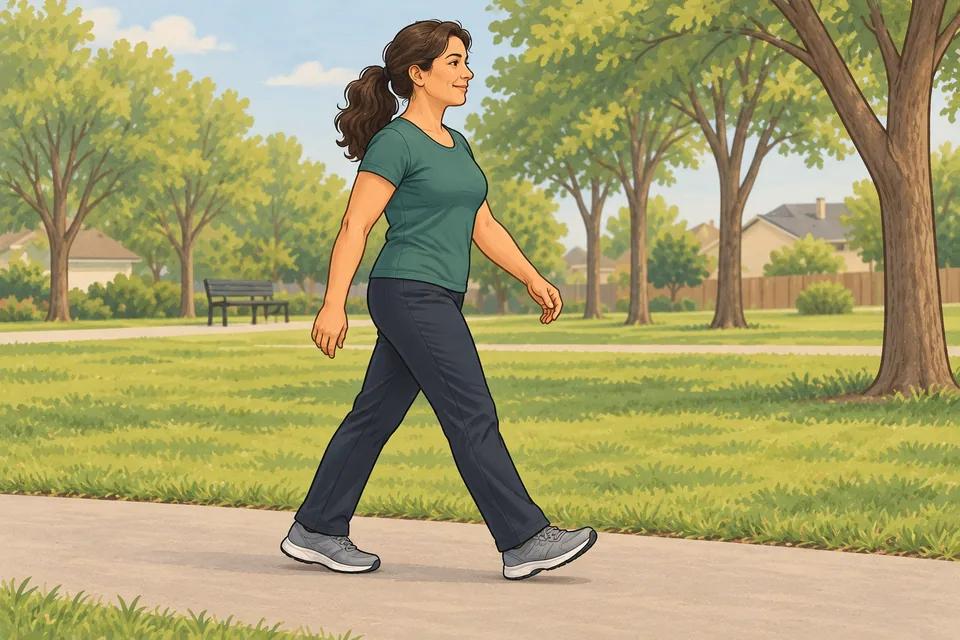
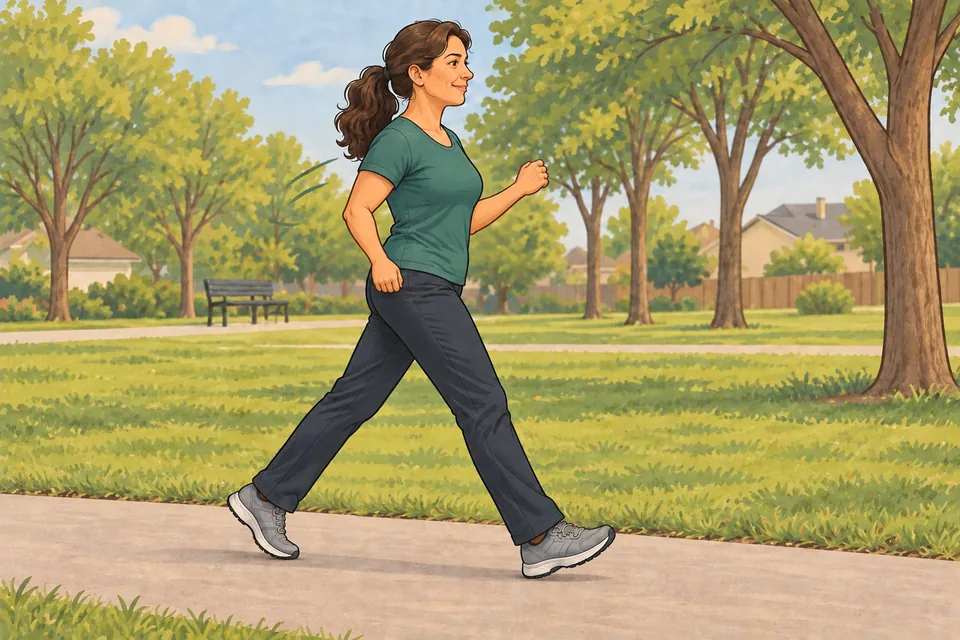
AI-generated shaded illustrations. A still image cannot measure speed or effort.
What about 10,000 steps a day?
You don’t have to choose between steps and intervals. A daily step goal can encourage you to move throughout the day. Interval walking gives you a structured session in which you deliberately change your pace. The steps you take during the session count toward your daily total too.
Which is more useful may depend on your starting activity level, schedule and preferences. If keeping a step count helps you move regularly, keep it. If a timed walk feels simpler, try a short interval session. You can also do both.
The well-known Japanese trial compared intervals with moderate walking that targeted at least 8,000 steps on at least four days each week—not exactly 10,000 steps every day. Research on daily steps also finds favorable long-term health associations below 10,000 steps; those observational findings do not establish a magic number or a cause-and-effect guarantee. Sources: 2007 interval trial; 2025 step-count review.
What did the Japanese research find?
In a 2007 randomized study, 246 adults averaging about 63 years old were assigned to interval walking, moderate continuous walking or no assigned walking training. After five months, the interval group improved several measured outcomes more than the moderate-walking group:
- Walking fitness: peak aerobic capacity rose by about 9% in the interval group.
- Leg strength: measured knee-extension and knee-flexion force rose by about 13% and 17%, respectively.
The researchers used individually assessed effort levels for the fast and easy periods. Those results describe groups in a specific study, not what every reader should expect from a beginner walking routine.
The original study also reported a greater reduction in resting systolic blood pressure, but a later trial did not find a significant group-level blood-pressure difference. Walking is worthwhile for many reasons; a specific blood-pressure improvement should not be promised. Walking also does not replace resistance exercise for all major muscle groups.
Choose where you walk
Can you add steps while working?
Possibly. An under-desk walking pad with a properly adjusted sit-stand desk can let some people walk slowly during suitable work tasks. That may be useful when long workdays otherwise involve a lot of sitting. Start slowly, make sure the workstation and floor space are safe, and choose tasks that do not demand precise mouse or keyboard control while you move.
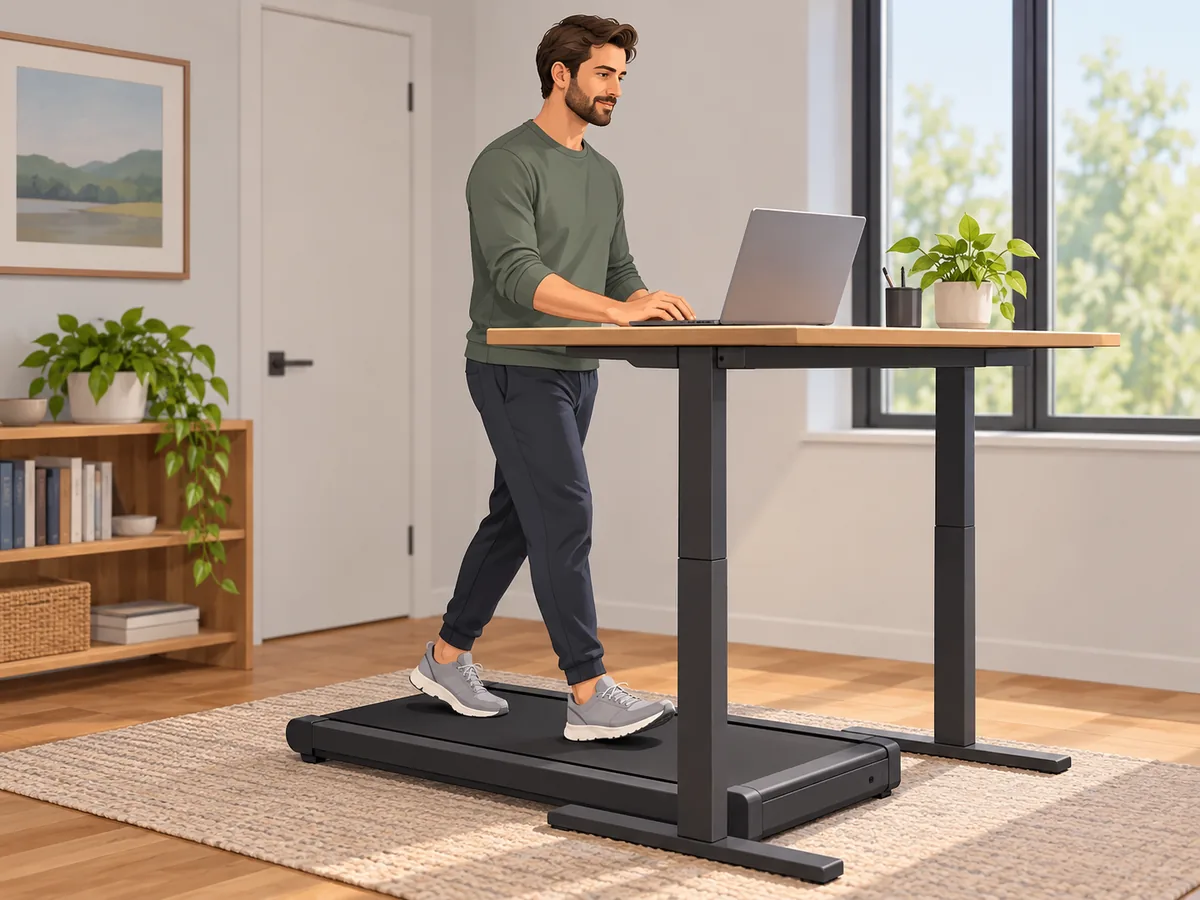
Walking while working is not the same as a brisk interval session. Keep focused work walking gentle; do not try faster intervals while typing or concentrating on a screen. In a workplace trial, treadmill desks showed some short-term increases in movement, but no significant reduction in total daily sedentary time across the 12-month study. Benefits and practicality depend on how—and whether—people use them. Active-workstation research.
Walking pads and adjustable desks vary in size, speed limits and operating requirements. Check the specific products before buying; neither is necessary to try interval walking.
Start at a pace that suits you
If you’ve been inactive, comfortable steady walking may be the best first step. Progress gradually. If you have a heart or lung condition, balance difficulties, an injury, recent surgery or other relevant health concerns, ask an appropriate clinician what level of exercise is suitable for you.
Stop and seek medical advice for chest pain or pressure, dizziness, or unusual breathlessness. Severe or persistent symptoms need urgent care.
The useful habit is the one you can do safely and regularly: steady walking, short intervals, a daily step goal or some combination.
Prefer a different free routine? See our no-equipment home workout and standing home workout.
References
- Nemoto et al. (2007): the original randomized interval-walking trial.
- Masuki et al. (2019): faster-walking time and within-program outcomes.
- Tsuda et al. (2023): interval walking and blood-pressure change.
- Ding et al. (2025): daily steps and health outcomes.
- NHS: walking for health.
- CDC: measuring physical activity intensity.
- CDC: activity with chronic conditions or disabilities.
- American Heart Association: developing an activity plan.
- CDC: What counts as physical activity
- Arguello et al. (2021): active workstation trial